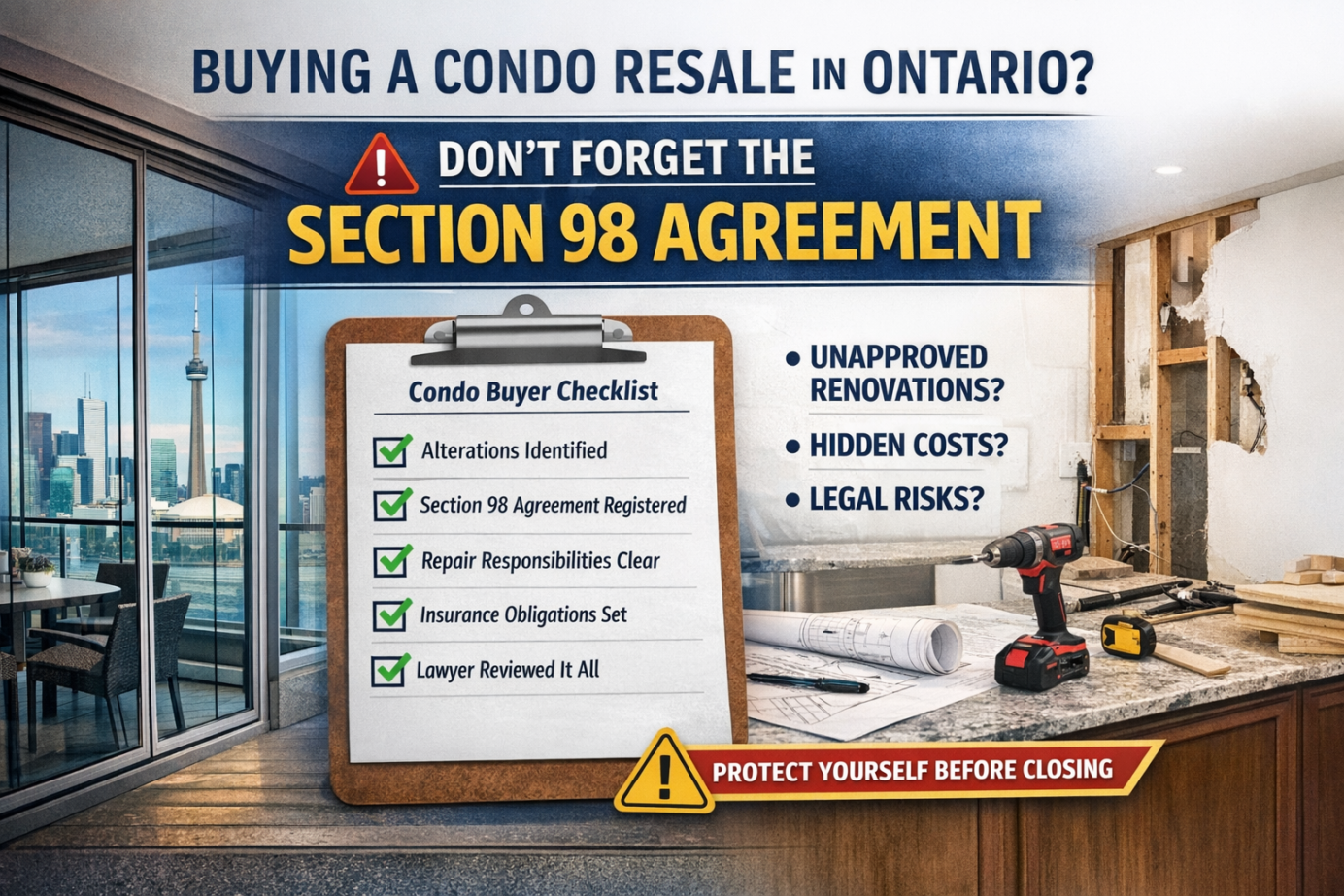
When buying a condo resale, most buyers focus on price, status certificates, and mortgage approval. But there’s a quieter document that can have serious legal and financial consequences if it’s missing:
👉 The Section 98 Agreement.
If the unit you’re buying has any alterations beyond the original builder layout, a Section 98 Agreement can be the difference between a smooth ownership experience — and inheriting a costly problem.
Let’s break down why this agreement matters and what every Ontario condo buyer should know.
What Is a Section 98 Agreement?
Under Ontario’s Condominium Act, a Section 98 Agreement is required when a unit owner makes alterations to common elements that are for their exclusive use.
Common examples include:
• Enclosing a balcony or terrace
• Installing new flooring that affects sound transmission
• Modifying plumbing, electrical, or HVAC systems
• Altering walls that impact common elements
• Installing exterior doors, windows, or structural features
Even though these changes may appear to be “inside the unit”, many condos legally treat them as common elements.
A Section 98 Agreement:
• Approves the alteration
• Confirms it complies with condo rules
• Transfers ongoing responsibility for the alteration to the unit owner
• Is registered on title and binds future owners
Why This Matters in a Condo Resale Purchase
When you buy a condo resale, you inherit the legal position of the seller — including any problems they failed to fix.
If an alteration was done without a Section 98 Agreement, the condominium corporation can:
❌ Demand that the alteration be removed
❌ Require the owner to pay to restore the unit
❌ Refuse to insure damage related to the alteration
❌ Charge legal fees back to the owner
❌ Enforce compliance years after the work was done
And yes — that means you, not the seller.
Common “Red Flag” Alterations Buyers Miss
Buyers often assume these are harmless upgrades:
• A “nice enclosed balcony”
• Heated floors
• Soundproofing or new flooring
• Custom plumbing or electrical work
• Unit layout changes
But if the work touches common elements and there’s no Section 98 Agreement, the condo corporation can still step in — even if the work was done years ago and approved “informally.”
Verbal approvals and emails are not enough.
Why Status Certificates Don’t Always Save You
Many buyers think:
“If it’s not flagged in the status certificate, I’m safe.”
Not always.
Status certificates:
• May not fully describe unauthorized alterations
• Rely on information disclosed by the seller
• Don’t replace the need for proper registration on title
A missing Section 98 Agreement can easily slip through unless your lawyer specifically looks for it.
Who Is Responsible for Fixing the Problem?
If a Section 98 Agreement should exist but doesn’t, responsibility usually falls on:
➡️ The current owner of the unit
That means buyers can be forced to:
• Negotiate a last-minute agreement with the condo corporation
• Pay engineering or legal costs
• Reverse renovations entirely
• Delay closing — or worse, inherit the risk after closing
How Buyers Can Protect Themselves
Before waiving conditions or closing on a condo resale, buyers should ensure:
✔ Any alterations are disclosed
✔ A registered Section 98 Agreement exists (where required)
✔ The agreement properly transfers obligations to the unit owner
✔ Maintenance, repair, and insurance responsibilities are clear
This review should be done by your real estate lawyer, not guessed at.
The Bottom Line
A Section 98 Agreement isn’t just a technicality — it’s a risk management tool.
When it’s missing, buyers can unknowingly take on:
• Legal exposure
• Repair obligations
• Enforcement actions from the condo corporation
• Unexpected costs long after closing
If you’re buying a condo resale in Ontario, confirming whether a Section 98 Agreement exists (or is needed) is just as important as reviewing the status certificate.
Call Capulli Law LLP – we know the ins and outs of condo purchasing and what to ask and look for. A simple call can save you in the long run.
Related Articles:
Buying Pre-Construction: Why Reviewing Condo Drawings Can Save You Tens of Thousands of Dollars
Tenants in Common or Joint Tenants? Which Ownership Structure is Right for You?
Buy, Sell & Close Your Home with One Team | Real Estate Agent and Lawyer in Toronto