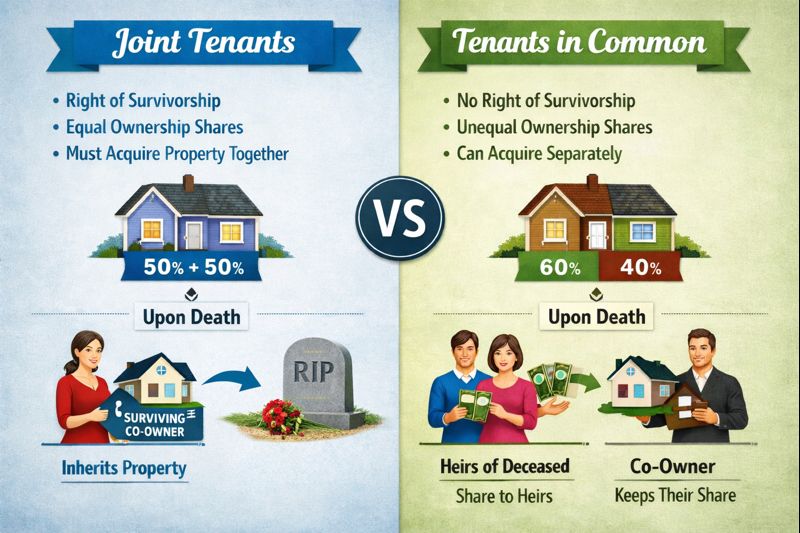
In Ontario, the terms “tenant in common” and “joint tenants” refer to different types of ownership arrangements for real property. The key differences between these two types of ownership are related to how the property is shared, what happens when one owner dies, and how ownership interests are transferred. Whether you are purchasing a property in Toronto to live in with another person, or looking to buy an investment property, how title to the property is held is key. Here’s a breakdown of the main differences:
1. Ownership Share
• Joint Tenants:
o Equal ownership: All joint tenants hold equal shares in the property. For example, if there are two joint tenants, each would own 50% of the property. If there are three, each would own one-third.
o The ownership is typically assumed to be undivided, meaning all owners have an equal right to the entire property, not just a specific part of it.
• Tenants in Common:
o Unequal ownership possible: Tenants in common can own different percentages of the property. For example, one tenant might own 70%, while the other owns 30%. The specific ownership share is defined in the deed or agreement.
o Each tenant in common has a distinct, specified interest in the property, and their share does not have to be equal to the others.
2. Right of Survivorship
• Joint Tenants:
o Right of Survivorship: When one joint tenant passes away, their share of the property automatically passes to the remaining joint tenants, not to their heirs. This is called the right of survivorship. The surviving joint tenants continue to own the property together.
o Example: If two people are joint tenants and one dies, the surviving person automatically owns 100% of the property.
• Tenants in Common:
o No Right of Survivorship: When a tenant in common dies, their share of the property does not automatically go to the other co-owners. Instead, it is passed on to their heirs or beneficiaries according to their Will or Ontario’s intestacy laws (if there is no Will).
o Example: If one of two tenants in common passes away, their share would go to their heirs or beneficiaries, not to the surviving tenant in common.
3. Transfer of Interest
• Joint Tenants:
o If a joint tenant tries to transfer their share of the property to someone else, it terminates the joint tenancy. The new owner would then become a tenant in common with the other joint tenants, and the right of survivorship is lost.
o Example: If one joint tenant sells their share, the remaining joint tenants no longer hold the property as joint tenants and will become tenants in common.
• Tenants in Common:
o Tenants in common can transfer or sell their share of the property to anyone, and this does not affect the ownership status of the other tenants. The co-owners remain tenants in common, even if one tenant sells or transfers their interest.
o Example: One tenant in common can sell their 50% share to someone else, and the new buyer becomes a tenant in common with the remaining co-owners.
4. Possession and Use
• Joint Tenants:
o All joint tenants have an equal right to possess and use the entire property, even though their ownership share is equal. No one tenant has exclusive rights to any part of the property.
• Tenants in Common:
o Similarly, tenants in common have equal rights to possession and use of the property, but they each own a distinct share of it. This share can be sold, mortgaged, or bequeathed as they wish, and they may or may not have an agreement regarding how the property is used or maintained.
5. Impact of Death
• Joint Tenants:
o Upon the death of one of the joint tenants, the ownership automatically transfers to the surviving joint tenants without the need for probate. This can help avoid delays in property transfer.
• Tenants in Common:
o Upon the death of a tenant in common, their share must be dealt with according to their Will or the laws of intestacy. The deceased’s estate may have to go through probate, which can take time and incur additional costs.
6. Tax Implications and Estate Planning
• Joint Tenants:
o Joint tenancy can create estate planning challenges, particularly if there is no Will or if the property is intended to go to specific heirs. Joint tenants might unintentionally disinherit individuals by leaving everything to the surviving joint tenants. Tax implications could arise, such as capital gains tax on the sale of the property.
• Tenants in Common:
o Tenants in common have more flexibility in terms of estate planning. They can ensure that their share of the property goes to specific individuals in their Will, which provides more control over the distribution of assets after death. Like joint tenants, there could be capital gains tax consequences if the property is sold.
7. Legal Implications and Disputes
• Joint Tenants:
o Joint tenancy is generally easier to deal with if the intention is for all co-owners to have equal ownership and for the property to transfer seamlessly upon death.
• Tenants in Common:
o With tenants in common, disputes could arise if the co-owners disagree on selling the property or how the property is managed, especially if they own unequal shares. Clear agreements and communication are vital.
Summary of Differences:
| ASPECT | JOINT TENANTS | TENANTS IN COMMON |
| OWNERSHIP SHARE | Equal ownership for all tenants | Ownership shares can be unequal |
| RIGHT OF SURVIVORSHIP | Yes, the deceased’s share automatically goes to surviving joint tenants | No, the deceased’s share goes to their heir or estate |
| TRANSFER OF INTERTEST | Transfer terminates joint tenancy, creating tenants in common | Can transfer share without affecting other co-owners |
| POSSESSION AND USE | All joint tenants have equal right to the property | All tenants in common have equal right to the property, but each has a specific share |
| IMPACT OF DEATH | Automatic transfer to surviving joint tenants without probate | Share transferred according to Will or intestacy laws, may require probate |
| ESTATE PLANNING | Can complicate estate planning – unintended transfer on death | More flexible in estate planning and control over property share |
Understanding the key differences between these two types of ownership is crucial when deciding how you want to hold property with others in Ontario. If you have specific concerns or need advice on which arrangement is best for your situation, it’s always wise to consult a real estate lawyer. Contact Capulli Law LLP today and see how we can help you choose the right ownership structure for your real estate purchase.