Toronto Residential Real Estate Lawyers

Legal Services for Buying, Selling and Transferring Property in Ontario
Buying or selling a home involves more than signing an agreement of purchase and sale. Every real estate transaction requires careful consideration of contractual obligations, title, mortgage financing, closing adjustments, taxes and the legal registration of ownership.
At Capulli Law LLP, we assist purchasers, sellers and property owners with residential real estate transactions throughout Toronto and the Greater Toronto Area.
Our services include purchase and sale transactions, condominium purchases, title searches, mortgage refinancing, property transfers and addressing legal concerns that arise before closing.
Buying a Home in Ontario
When purchasing a home, a lawyer plays an important role in confirming that the purchaser receives the ownership interest contemplated by the agreement of purchase and sale.
Our legal work can include the following:
Reviewing the Agreement of Purchase and Sale
The agreement establishes the purchase price, deposit, closing date, conditions and contractual obligations of the parties.
Important provisions may address financing, inspections, vacant possession, included fixtures and chattels, title requirements and the consequences of failing to close.
Once accepted, an agreement is generally binding, subject to its terms and applicable law. Purchasers should therefore consider legal review before signing whenever possible.
Conducting a Title Search
A title search identifies the registered owner and legal interests affecting the property.
These may include mortgages, easements, rights of way, restrictive covenants, notices, construction liens and other registered instruments.
Not every registered instrument is a title defect. Some interests legitimately remain on title after closing, while others must be addressed by the seller.
Our role includes assessing title in accordance with the agreement and identifying matters requiring further investigation or resolution.

Reviewing the Agreement of Purchase and Sale
The agreement establishes the purchase price, deposit, closing date, conditions and contractual obligations of the parties.
Important provisions may address financing, inspections, vacant possession, included fixtures and chattels, title requirements and the consequences of failing to close.
Once accepted, an agreement is generally binding, subject to its terms and applicable law. Purchasers should therefore consider legal review before signing whenever possible.
Conducting a Title Search
A title search identifies the registered owner and legal interests affecting the property.
These may include mortgages, easements, rights of way, restrictive covenants, notices, construction liens and other registered instruments.
Not every registered instrument is a title defect. Some interests legitimately remain on title after closing, while others must be addressed by the seller.
Our role includes assessing title in accordance with the agreement and identifying matters requiring further investigation or resolution.

Reviewing Mortgage Requirements
Where a purchaser is obtaining mortgage financing, the lawyer receives instructions from the lender and prepares the required documents.
This may include confirming ownership, reviewing lender conditions, arranging title insurance, completing mortgage documentation and registering the mortgage.
Preparing for Closing
Before closing, the lawyer calculates the funds required, including the remaining purchase price, land transfer tax, legal fees, disbursements and adjustments.
The lawyer also coordinates with the seller’s lawyer to complete the exchange of funds and closing documentation.
Registering Ownership
On closing, the transfer is registered through Ontario’s electronic land registration system, along with any new mortgage or other required instruments.
Following completion, the purchaser receives reporting documentation confirming the legal steps taken.
Selling a Home in Ontario
A lawyer representing a seller is responsible for completing the legal requirements necessary to transfer the property to the purchaser in accordance with the agreement.
Reviewing the Sale Agreement
The lawyer reviews the agreement to identify the closing date, sale price, contractual obligations, included property and any special provisions.
Responding to Title Requisitions
A purchaser’s lawyer may raise concerns about title, mortgages, encumbrances or other legal matters.
The seller’s lawyer reviews these requisitions and responds to issues the seller is contractually obligated to address.
Discharging Existing Mortgages
If a mortgage is registered against the property, arrangements ordinarily must be made to pay it out and obtain its discharge in accordance with the closing arrangements.
A seller should obtain information about any applicable mortgage prepayment penalties before closing.

Selling a Home in Ontario
A lawyer representing a seller is responsible for completing the legal requirements necessary to transfer the property to the purchaser in accordance with the agreement.
Reviewing the Sale Agreement
The lawyer reviews the agreement to identify the closing date, sale price, contractual obligations, included property and any special provisions.
Responding to Title Requisitions
A purchaser’s lawyer may raise concerns about title, mortgages, encumbrances or other legal matters.
The seller’s lawyer reviews these requisitions and responds to issues the seller is contractually obligated to address.
Discharging Existing Mortgages
If a mortgage is registered against the property, arrangements ordinarily must be made to pay it out and obtain its discharge in accordance with the closing arrangements.
A seller should obtain information about any applicable mortgage prepayment penalties before closing.
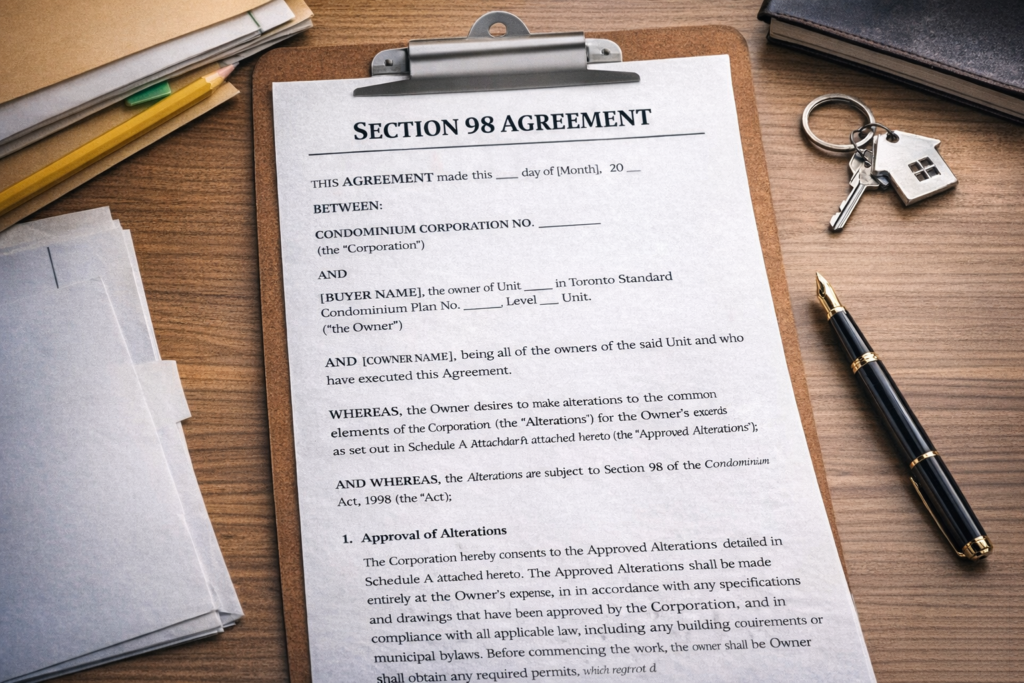
Preparing the Statement of Adjustments
Certain expenses are allocated between the parties as of the closing date.
Common adjustments include municipal property taxes, condominium common expenses and other charges addressed by the agreement.
Completing the Sale
Once the closing requirements have been satisfied, the seller’s lawyer accounts for the sale proceeds, pays required obligations and distributes the balance in accordance with the seller’s instructions and applicable legal duties.
Condominium Purchases and Status Certificate Reviews
Purchasing a condominium involves additional legal considerations because ownership includes an individual unit and an interest in the condominium corporation’s common elements.
A purchaser should understand the condominium corporation’s governing documents, financial obligations and restrictions before becoming bound to complete the purchase.
What Is a Status Certificate?
A status certificate is a document prepared by a condominium corporation that provides prescribed information concerning the corporation and a particular unit.
It can disclose outstanding common expenses, approved increases, certain assessments, insurance information, litigation and other information required by Ontario condominium legislation.
A status certificate is normally accompanied by relevant documents, which may include the declaration, bylaws, rules, budget and financial statements.
What Does a Lawyer Review?
A legal review may consider whether common expenses are in arrears, whether special assessments have been disclosed, what restrictions affect the unit and whether there are legal matters requiring the purchaser’s attention.
The lawyer may also identify provisions concerning pets, leasing, alterations, parking, lockers and use of the property.
A legal review is not a building inspection, engineering assessment or independent audit of the condominium corporation’s finances.
Purchasers may require additional advice from property inspectors, engineers, accountants or other specialists, depending on the circumstances.
First-Time Homebuyers in Ontario
First-time purchasers may qualify for certain tax refunds and government programs, depending on their circumstances.

What Does a Lawyer Review?
A legal review may consider whether common expenses are in arrears, whether special assessments have been disclosed, what restrictions affect the unit and whether there are legal matters requiring the purchaser’s attention.
The lawyer may also identify provisions concerning pets, leasing, alterations, parking, lockers and use of the property.
A legal review is not a building inspection, engineering assessment or independent audit of the condominium corporation’s finances.
Purchasers may require additional advice from property inspectors, engineers, accountants or other specialists, depending on the circumstances.
First-Time Homebuyers in Ontario
First-time purchasers may qualify for certain tax refunds and government programs, depending on their circumstances.
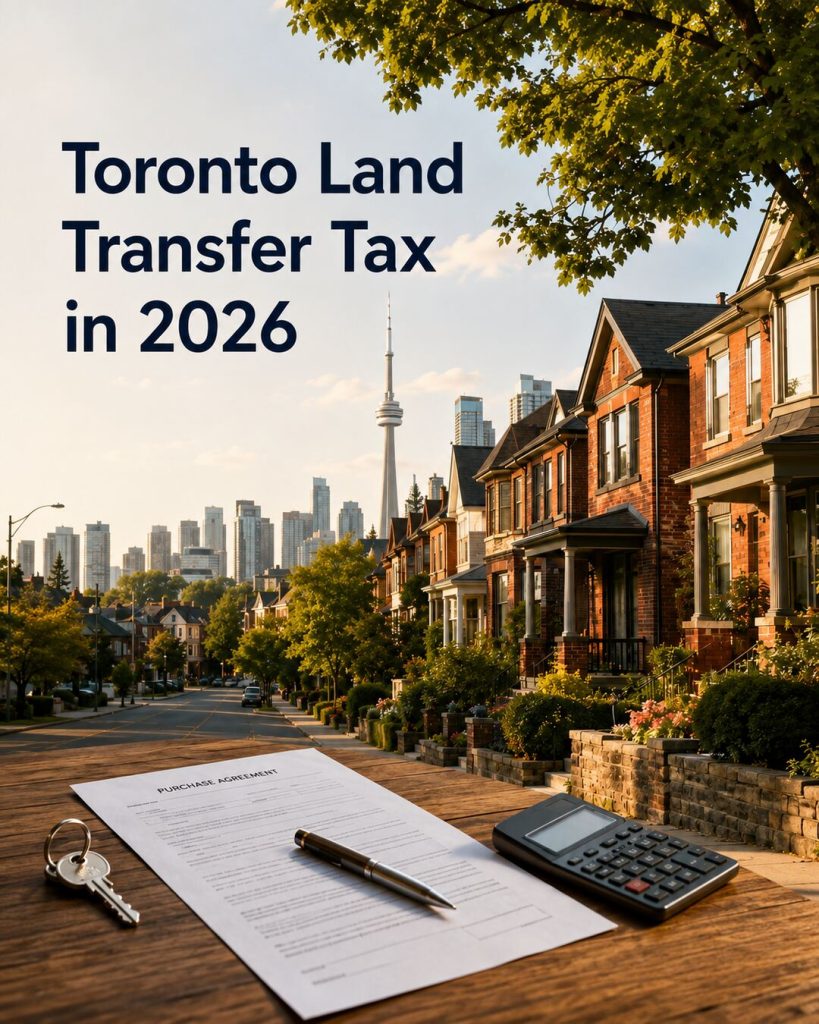
Ontario Land Transfer Tax Refund
Ontario provides a land transfer tax refund of up to $4,000 for eligible first-time homebuyers.
Generally, the applicant must meet conditions concerning age, qualifying citizenship or permanent-resident status, occupation of the property as a principal residence, and previous ownership of a home or an interest in one anywhere in the world.
A qualifying purchaser’s spouse’s ownership history can also affect eligibility.
The determination is based on the applicable legislation and the purchaser’s actual circumstances. Simply being a first-time mortgage borrower does not necessarily establish eligibility.
Toronto Municipal Land Transfer Tax
Purchasers acquiring eligible property within the City of Toronto may also qualify for a municipal first-time homebuyer rebate.
Toronto’s municipal land transfer tax is separate from Ontario’s provincial land transfer tax. Purchasers should therefore calculate both taxes when applicable.
Why Ownership History Matters
A person may have an interest in a property through title registration, a trust arrangement, inheritance or other means.
The legal and beneficial ownership structure may be relevant when determining eligibility for particular tax refunds.
Prospective purchasers with unusual ownership arrangements should obtain legal advice before claiming a first-time homebuyer refund.
Title Transfers and Changes in Ownership
Property owners sometimes wish to add or remove a spouse, child or other family member from title.
Although these transactions may appear straightforward, they can have significant legal and tax consequences.
Joint Tenancy
Joint tenants ordinarily hold property with a right of survivorship. When one joint tenant dies, the deceased’s interest generally passes to the surviving joint tenant or tenants, subject to any applicable legal or equitable issues.
Tenancy in Common
Tenants in common hold distinct ownership interests that do not automatically pass to the surviving owners.
A deceased owner’s interest ordinarily becomes part of the estate and is dealt with under the will or applicable intestacy legislation.
Transfers Between Family Members
A transfer involving a spouse, child or parent can raise issues concerning mortgage consent, land transfer tax, beneficial ownership, capital gains tax and future estate disputes.
Even if the property is being transferred without a conventional purchase price, tax or mortgage consequences may arise.

Why Ownership History Matters
A person may have an interest in a property through title registration, a trust arrangement, inheritance or other means.
The legal and beneficial ownership structure may be relevant when determining eligibility for particular tax refunds.
Prospective purchasers with unusual ownership arrangements should obtain legal advice before claiming a first-time homebuyer refund.
Title Transfers and Changes in Ownership
Property owners sometimes wish to add or remove a spouse, child or other family member from title.
Although these transactions may appear straightforward, they can have significant legal and tax consequences.
Joint Tenancy
Joint tenants ordinarily hold property with a right of survivorship. When one joint tenant dies, the deceased’s interest generally passes to the surviving joint tenant or tenants, subject to any applicable legal or equitable issues.
Tenancy in Common
Tenants in common hold distinct ownership interests that do not automatically pass to the surviving owners.
A deceased owner’s interest ordinarily becomes part of the estate and is dealt with under the will or applicable intestacy legislation.
Transfers Between Family Members
A transfer involving a spouse, child or parent can raise issues concerning mortgage consent, land transfer tax, beneficial ownership, capital gains tax and future estate disputes.
Even if the property is being transferred without a conventional purchase price, tax or mortgage consequences may arise.
Real Estate Closing Costs in Ontario
Purchasers should understand the difference between legal fees and other closing expenses.
Common expenses include:
- Legal fees and HST
- Land registration charges
- Title insurance premiums
- Title and execution search expenses
- Ontario land transfer tax
- Toronto municipal land transfer tax, where applicable
- Property tax and condominium adjustments
- Other transaction-specific disbursements
Additional expenses may arise in new construction transactions, including adjustments under the builder’s agreement.
A purchaser should obtain a transaction-specific estimate before closing.

Real Estate Closing Costs in Ontario
Purchasers should understand the difference between legal fees and other closing expenses.
Common expenses include:
- Legal fees and HST
- Land registration charges
- Title insurance premiums
- Title and execution search expenses
- Ontario land transfer tax
- Toronto municipal land transfer tax, where applicable
- Property tax and condominium adjustments
- Other transaction-specific disbursements
Additional expenses may arise in new construction transactions, including adjustments under the builder’s agreement.
A purchaser should obtain a transaction-specific estimate before closing.
Frequently Asked Questions
Do I need a lawyer to buy a house in Ontario?
A lawyer is ordinarily required to complete the legal transfer of registered ownership through Ontario’s electronic land registration system. Purchasers also benefit from legal advice concerning the agreement, title, financing and closing obligations.
What documents should I send my lawyer after signing an offer?
Generally, provide the complete agreement of purchase and sale, all schedules and amendments, the property address, closing date, realtor contact information, mortgage broker or lender details and identification information requested by the law firm.
For condominium purchases, the status certificate package should also be provided when available.
How long does a real estate closing take?
The period between signing the agreement and closing depends on the negotiated closing date. Some transactions close within weeks, while others involve several months.
Legal work typically intensifies as the closing date approaches. Delays may arise from financing, title issues, document preparation or outstanding contractual conditions.
What happens if the seller cannot close?
A seller who fails to complete a binding agreement may be in breach of contract. Depending on the facts, the purchaser may have remedies involving damages or, in appropriate circumstances, specific performance.
The parties may instead negotiate an extension or another resolution.
Available remedies depend on the agreement, the reasons for the failure and the surrounding circumstances.
What is title insurance?
Title insurance is an insurance policy that may provide protection against specified title-related risks, including certain defects, fraud-related losses and other covered matters.
Coverage depends on the terms, conditions and exclusions of the particular policy.
Title insurance does not replace proper legal investigation or guarantee that every property issue will be covered.